Mosaic’s taller cousin — a small slanted rectangle of four diagonals (short, long, long, short) that lines up into an even, woven grid.
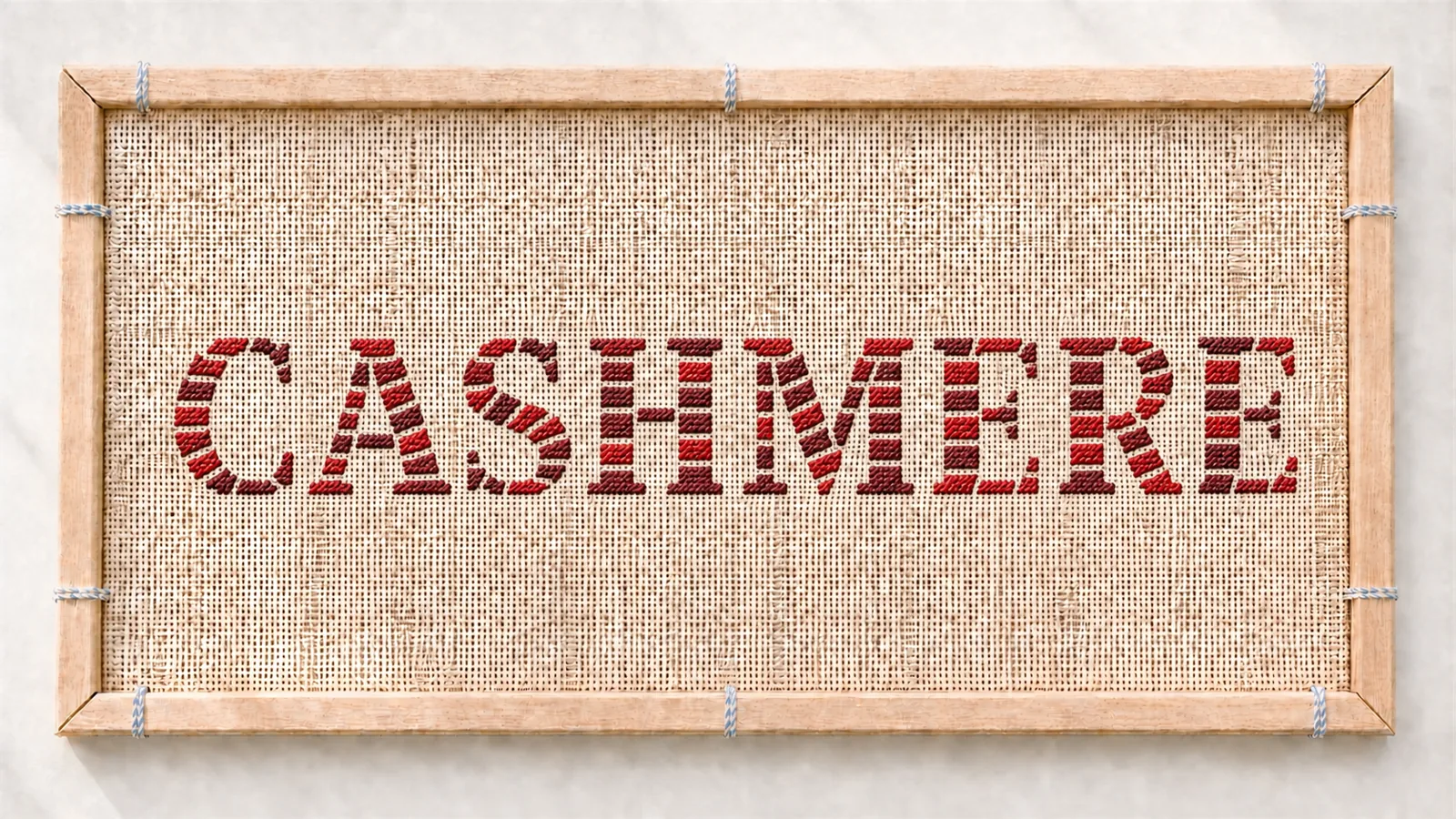
The beauty portrait — the stitch spelled in its own texture. Same frame and crop across every stitch in the library.
What the texture looks like
Worked up close: small slanted rectangles, each four diagonals — short, long, long, short — lined up in an even grid.
Difficulty
Ready for more Like mosaic, one stitch taller.
Appearance
Soft slanted rectangles in an aligned grid.
Coverage
Good, with a bit more depth than mosaic.
Pattern repeat
Four diagonals per 2×3 rectangle; blocks aligned in a grid.
Good for
Backgrounds · borders · textured fills.
You’ll need
Tapestry needle · thread that fully covers 13-mesh canvas · one color for practice.
Exactly how to make it
Make one block
Completed stitches are shown in blush, the stitch in progress in red, and the next hole circled in blue. Each block is four diagonals: short, long, long, short.
1
Come up at 1, go down at 2 — a short diagonal over one intersection.
2
Come up at 3, go down at 4 — a longer diagonal over two canvas threads (spanning two threads).
3
Come up at 5, go down at 6 — a second long diagonal over two, parallel to it.
4
Come up at 7, go down at 8 — a short diagonal closes the block. Short-long-long-short makes an upright rectangle.
Build the pattern
Lining the blocks up
Standard cashmere is an aligned grid, not a staggered brick. Set each finished rectangle directly beside the last, and each new row directly below, so the blocks line up vertically and horizontally. The even grid appears after the first few units. (A shifted version exists — staggered cashmere — but that is a separate variant.)
Two blocks side by side — each four diagonals, short-long-long-short.A second row directly below, blocks aligned in a clean grid.
This is normal: cashmere uses the same short-long-long-short rhythm as a taller mosaic block. Line each completed rectangle up with the blocks beside and above it; the grid appears after the first few units.
What yours should look like
Front and back
Front — slanted rectangles lined up in an even grid.Back of this worked sample (schematic) — carries stepping between the blocks.
Common mistake — and the fix
Keep the two long middle stitches the same length and parallel, and line each rectangle up with the blocks beside and above it. If one drifts, the rectangle skews and the grid stops lining up.